
Website Terms of Use

All content and media on the CFPhysio website is created and published online for information purposes only. Before viewing the content on the this website you should read the website terms of use and privacy policy. The content in this website is not intended to be a substitute for professional medical advice and should not be relied upon as medical advice. If you have any concerns about your health, or concerns are raised from information on this website, please contact your treating doctor, qualified health professional or local clinic.

Click here to view website Terms of Use

I DO NOT AGREE

Skip to content
CF Physio — Learn. Empower. Thrive.

Introduction

What body parts are affected?

CF affects the body in many different ways.

Parts of the body that may be affected by CF are:

  • Lungs
  • Pancreas
  • Sinuses
  • Bones
  • Liver
  • Lean Tissue
  • Reproduction

CF can affect each person very differently. Treatment is aimed at managing symptoms, maintaining lung health, maintaining a healthy weight, optimising body composition, and managing other changes either before they occur or as they occur.
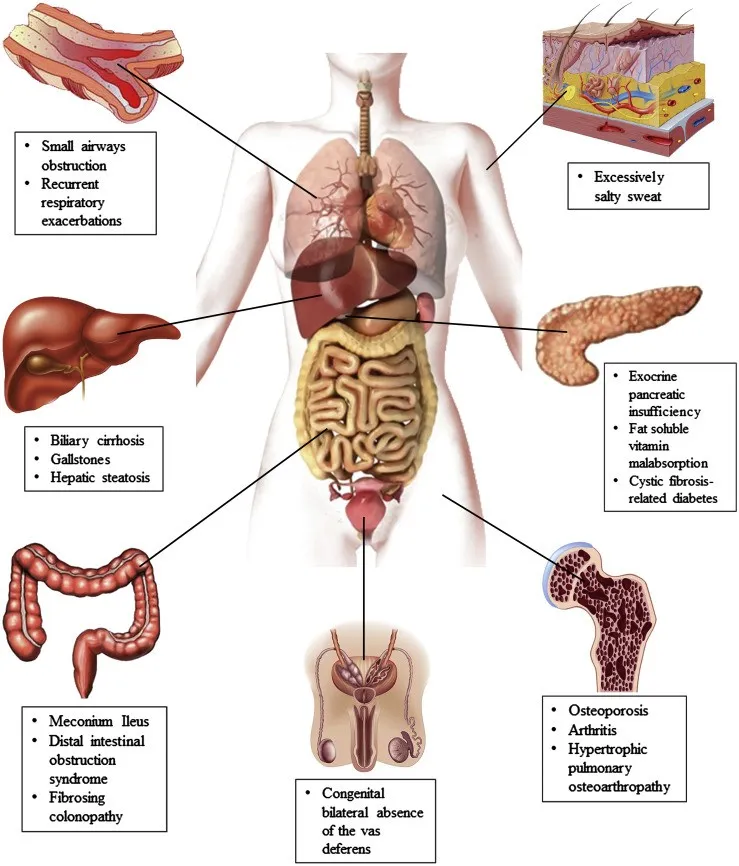
Diagram of the body systems affected by cystic fibrosis: lungs (small airways obstruction, recurrent respiratory exacerbations), skin (excessively salty sweat), liver (biliary cirrhosis, gallstones, hepatic steatosis), pancreas (exocrine pancreatic insufficiency, fat soluble vitamin malabsorption, CF-related diabetes), intestines (meconium ileus, distal intestinal obstruction syndrome, fibrosing colonopathy), reproductive system (congenital bilateral absence of the vas deferens), and bones (osteoporosis, arthritis, hypertrophic pulmonary osteoarthropathy).
Body parts/systems affected by CF. Permissions to use S Molina, W Hunt, Elsevier

What symptoms do people with CF have?

People with CF can have a range of signs and symptoms, which might happen at different stages in life, though not everyone has all of these symptoms. Some of these include:

  • Increased cough
  • Prolonged, moist (wet) or productive cough or dry cough
  • Increased mucus (sputum) production
  • Frequent chest infections
  • Gastro-oesophageal reflux (this can feel like heart burn, or spew burps)
  • Fatigue/tiredness
  • Difficulty to exercise or participate in physical activities
  • Changes in bowel actions
  • Reduced body weight and difficulty building muscle
  • Abnormally salty sweat
  • Bone and joint pain
  • Abnormal blood sugar levels or diabetes
  • Urinary stress incontinence/bladder leakage
  • Altered posture
  • Musculoskeletal pain